



14 Feb Psychological groups – why can working together be better than working alone?
The famous Austrian psychoanalyst Sigmund Freud once said: “We come into the world alone and we leave it alone.” However, while loneliness is an inevitable part of life, it does not mean that we have to deal with all difficulties alone. Humans are social beings – companionship and support can help us overcome challenges more easily, and better understand ourselves and our relationships with others.
When we think of emotional health, we usually imagine individual counseling with a psychologist. However, there is another effective option: psychological groups. They provide a space to learn, grow, and experience that we are not alone in our difficulties.
A group can be like a dress rehearsal for life – a safe environment where you can explore your emotions, relationships and learn new skills. They can be of different types, we would like to introduce two of them:
✔ Skills development groups helps you learn specific techniques and strategies, such as stress management, communication, or emotion regulation. The key here is a clear structure, practice, and practically applicable methods.
✔ Psychological groups It allows us to gain a deeper understanding of ourselves through interactions with others. It helps us recognize repetitive patterns of behavior, better understand how relationships affect us, and build emotional resilience.
| Both types of groups can be valuable – it all depends on your needs. We share insights from psychologists Dominykas Šimkus and Ieva Vasionytė of the clinic “Gali būti” about what different formats of psychological groups look like – Both specialists are currently organizing groups of this type, we invite you to register at the bottom of the page! |
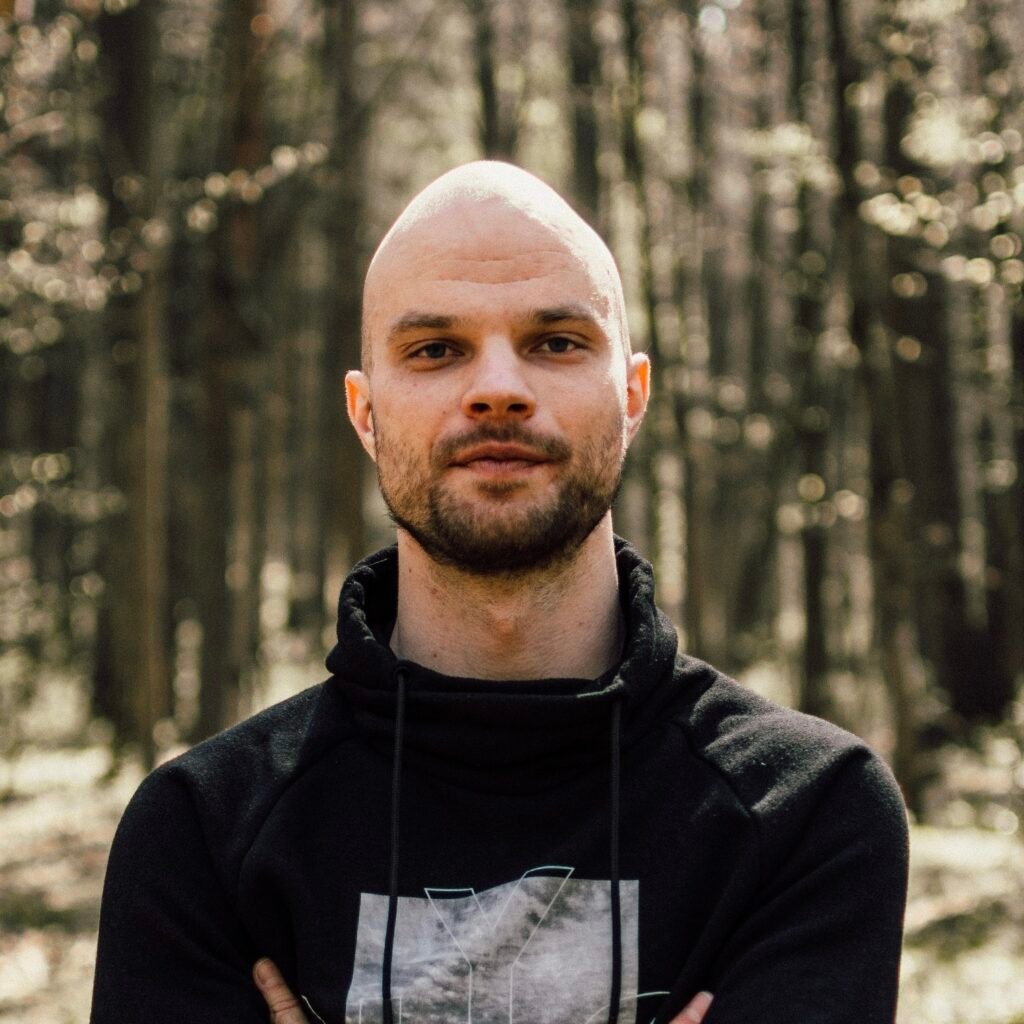
Psychologist Dominykas Šimkus
About the psychological group
(If you want to better understand yourself through relationships with others…)
We can imagine a psychological group as a dress rehearsal of life. What we feel in a group is also reflected in life, and vice versa. The difference is that in everyday life we very rarely manage to consistently discuss our relationships with people and bring them to light. We also avoid sharing with others how they affect us and what we think about them - after all, it is often not necessary, and sometimes even unacceptable. A psychological group creates conditions for exploring and discussing our presence among people and their impact on ourselves.
First of all, it allows us to better understand and identify with what is going on inside us when we are around others. We can test our assumptions about people by hearing their own opinions, thoughts, and feelings. Often, when working in a group, we realize that others think and feel completely different from what we think about them.
Also, although it poses more challenges, the group is a place where we can learn and experience the impact we ourselves have on other people. Sometimes this is very difficult to accept, there is resistance and arguing about who is right and who is wrong. However, the very awareness of how we affect others can be important and valuable. Through this awareness, we can gain new insights into life situations in which this impact is silent, but it influences a wide variety of other people's decisions, the motives of which we do not know.
By sharing our experiences and struggles in a group, we can hear a variety of similar, unfictional, and honest stories in response, which creates a sense of community and reduces the tension that arises from the thought that our problems are unique and that we are isolated from them.
One person's ears and heart can have a healing effect. When there are nine or ten more of them, this effect is only stronger 🙂
In what cases might it be more beneficial for a person to choose group therapy rather than individual counseling?
A group, compared to individual consultations, provides much more benefit if we want to directly explore our relationships with people and the impact of our presence on them. A group also offers a unique opportunity to experience listening, support, feedback and community from “ordinary” people, not specialists, which can sometimes seem more sincere and believable. However, it is important to understand that sometimes in a group we can lose exclusive individual attention just for us. Sometimes certain issues require a lot of in-depth and detailed analysis, and individual consultations would be more suitable for this.
What should a person know before joining a psychological group?
When going to a group, you should be open-minded and ready to accept the openness of other group members. Open relationships can be challenging and full of emotions, so group therapy can sometimes be more difficult to handle than individual therapy.
It may seem obvious, but when joining a group, it is also important to have an interest in interpersonal relationships, a willingness to connect with people, and a belief or at least a feeling that it can help. Therefore, it is very important to ask yourself - how, using other people's relationships with me and mine with them, could I solve or at least recognize my difficulties that arise in life?
It also seems important to mention that being in a group we have a greater responsibility than when attending individual consultations. A psychologist does work, gets paid for it, so by avoiding coming to consultations or seriously getting involved in work, we mostly harm only ourselves. However, being in a group, each member solves very important and sensitive issues for him, and the effectiveness of their consideration directly depends on the level of involvement and mutual cooperation of all. Missing meetings and passive participation strongly affect the entire atmosphere of the group.
What would be your message to those who are hesitant about participating in a psychological group?
Group therapy is a rather slow process, requiring a lot of effort and involvement, but it can yield a lot of useful and meaningful results. We are social beings and nothing hurts, but at the same time heals, like close contact with other people. A group is a great opportunity to explore your presence among people and try to change it in a positive direction.

Psychologist Ieva Vasionytė
About skills development groups
(If you feel that anxiety and stress are taking over your daily life too much…)
Skill development groups are structured sessions where participants learn practical tools to better manage emotions, stress, and relationships. These groups are usually evidence-based and are designed for people facing mental health challenges, as well as those seeking to strengthen their psychological resilience, emotional literacy, or learn skills needed at a specific stage of life: parenthood, adolescence, etc. In skill development groups, meeting time is devoted to theoretical material and learning specific skills (e.g., public speaking, responding to a child’s intense emotions, mindful awareness). Less attention is paid to each participant’s life story and individual experiences (although personal experiences are also shared and challenges arising from applying the skills being learned are discussed). Homework is often assigned. The number of sessions is limited. Some examples of skill development groups include: teen social skills groups, positive parenting program, mindfulness-based stress management program, etc.
Mindfulness-based stress management program
The mindfulness-based stress management program was developed in 1979 by microbiologist and Buddhist meditation teacher Jon Kabt-Zinn. Its first participants were patients at the Stress Disorders Clinic at the Massachusetts Medical School in the United States. Today, this program is considered one of the most reliable ways to train mindfulness skills, which are extremely important in reducing symptoms of anxiety and mood disorders, in order to develop stress resistance, and increase psychological well-being.
What is Mindfulness?
> It is focusing attention on the present moment in a certain way: purposefully and non-judgmentally.
> It is a skill that is trained through meditations that have their roots in ancient Eastern tradition, and the form and content are developed after thousands of years of scientific research.
What Mindfulness based stress management program might be helpful?
During the program, by systematically performing meditations, you will develop the skill of Mindfulness. This will help you:
• focus and stay focused on the things that are important to you;
• reduce impulsiveness, make more rational decisions;
• relax, reduce anxiety and react calmly in stressful situations;
• become more patient and tolerant of both oneself and others;
• perform boring or difficult tasks with greater ease;
• worry less about the past or the future, and be more in the “here and now”;
• it is easier to cope with chronic and emotional pain;
• it is easier to give up bad habits: smoking, emotional eating.
About the classes and what happens during them:
Meetings are held for two months, once a week, for 2.5 hours. Classes are held in a group (up to 12 people). During the group, there is little theory and a lot of practice. Meditations are performed, developing the skill of mindful awareness, and homework and practices are discussed.
The group format helps you achieve your goals more easily: it increases your sense of commitment to practicing independently, provides an opportunity to hear the experiences of others and ask questions to the group leaders, and together overcome emerging challenges while meditating.
Important to know:
Although the program can be useful simply by attending classes, the most significant results are achieved by completing homework assignments, so before enrolling in the program, it is very important to consider your realistic ability to devote 30-40 minutes of your time to practice every day for the next two months.
Currently, the clinic "Gali būti" is organizing two different psychological groups In Vilnius – we invite you to register for the selection interview! More information about each group and registration can be found at here.
Nėra komentarų